

Popular articles

Pre-installed generator from Beneteau
If you want a generator installed from Beneteau when ordering a Swift Trawler 37, you have the option of adding the "Air Conditioning Pack" which consists of:
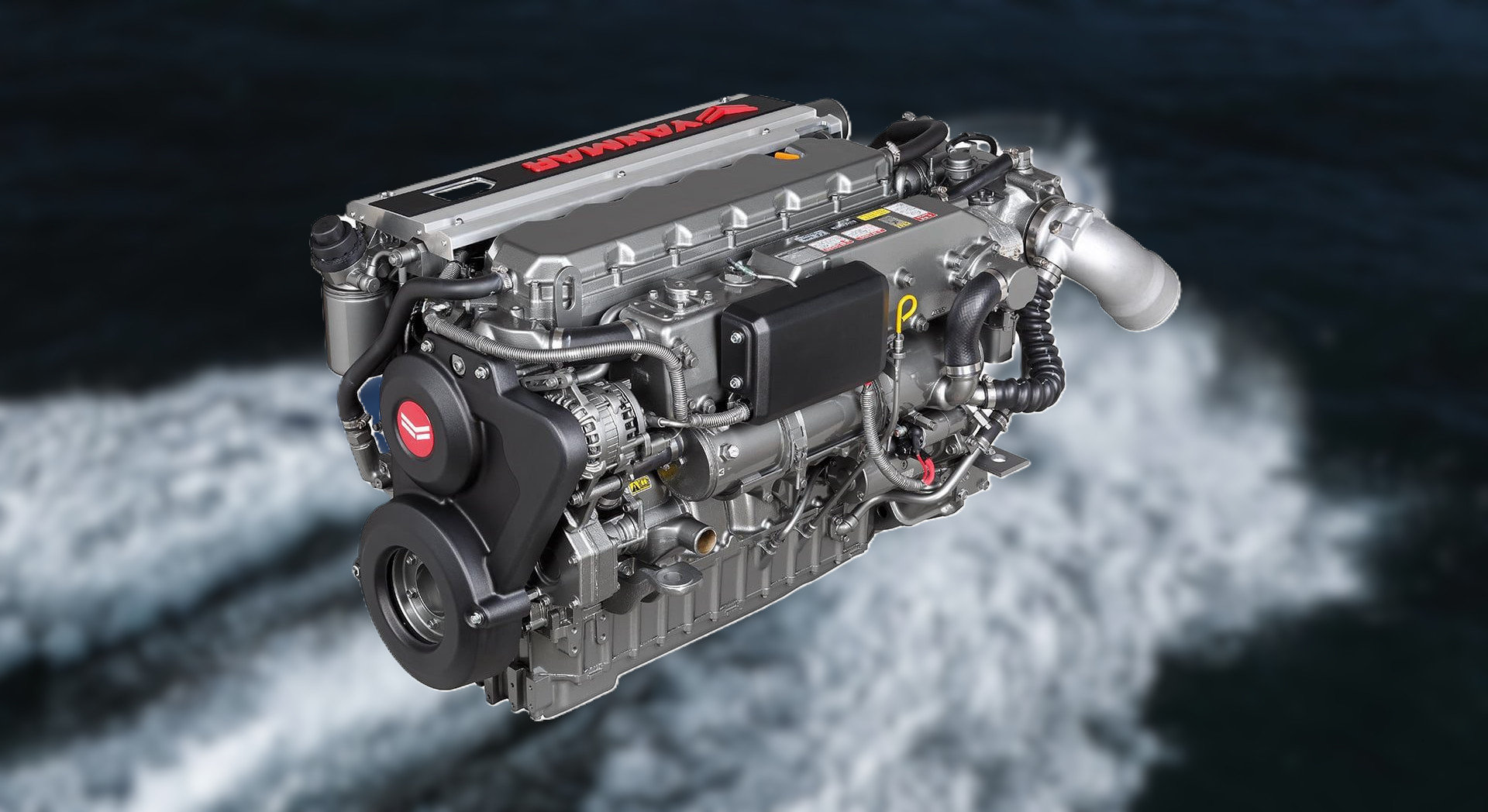
- an 8.5 kVA diesel-powered generator
- 32,000 BTU air conditioning
In our climate, we need heating more than cooling, so we opted for the 5,500 W forced-air heating instead of air conditioning.
It's an either-or option from Beneteau (you can't have both installed) and the heating available from the AC isn't enough for the colder parts of the year in Sweden.
That meant the "Air Conditioning Pack" wasn't an option for us.
Perhaps Beneteau would have agreed to install the generator without the air conditioning units, but we didn't really want a diesel generator for the following reasons:
- size - the generator takes up a lot of space in the lazarette, which we really need for storage
- noise - while modern diesel generators are relatively quiet, they can be disturbing for people onboard (or for neighbouring boats)
- local rules - many marinas and anchorages in Sweden prohibit the use of diesel generators
Our preferred alternative: a fuel cell
A fuel cell is a relatively small unit which converts the energy in methanol into electricity through an electrochemical process.
No combustion means it's virtually silent and vibration-free.
It detects when the batteries' state-of-charge drops below a set threshold and automatically starts to charge them.
It doesn't provide as much power as a diesel generator, nor is it suitable for intermittent electrical loads, but it doesn't need to be - its purpose is to keep the house battery bank charged rather than to power electric devices directly.
The 2,000 W inverter is plenty enough for us to power our 220 V devices onboard from the house battery bank (especially since we don't run air conditioning nor an electric galley).
How much power does a fuel cell provide?
An Efoy 150 weighs less than 7 kg and can charge lithium batteries with roughly 150 Ah/day.
In other words, if your daily electricity consumption is below 150 Ah your only limitation is how much methanol you have onboard.
Running an Efoy 150 for 24 hours to charge 150 Ah requires about 1.8 litres of methanol.
That means a single 10-litre methanol container will last you over five days running 24/7.
How much power do you need then?
This is one of the bigger questions to answer when dimensioning your electricity system, which is why I've gone into details of how we calculated it for our boat.