

Popular articles


The first 50 hours are crucial
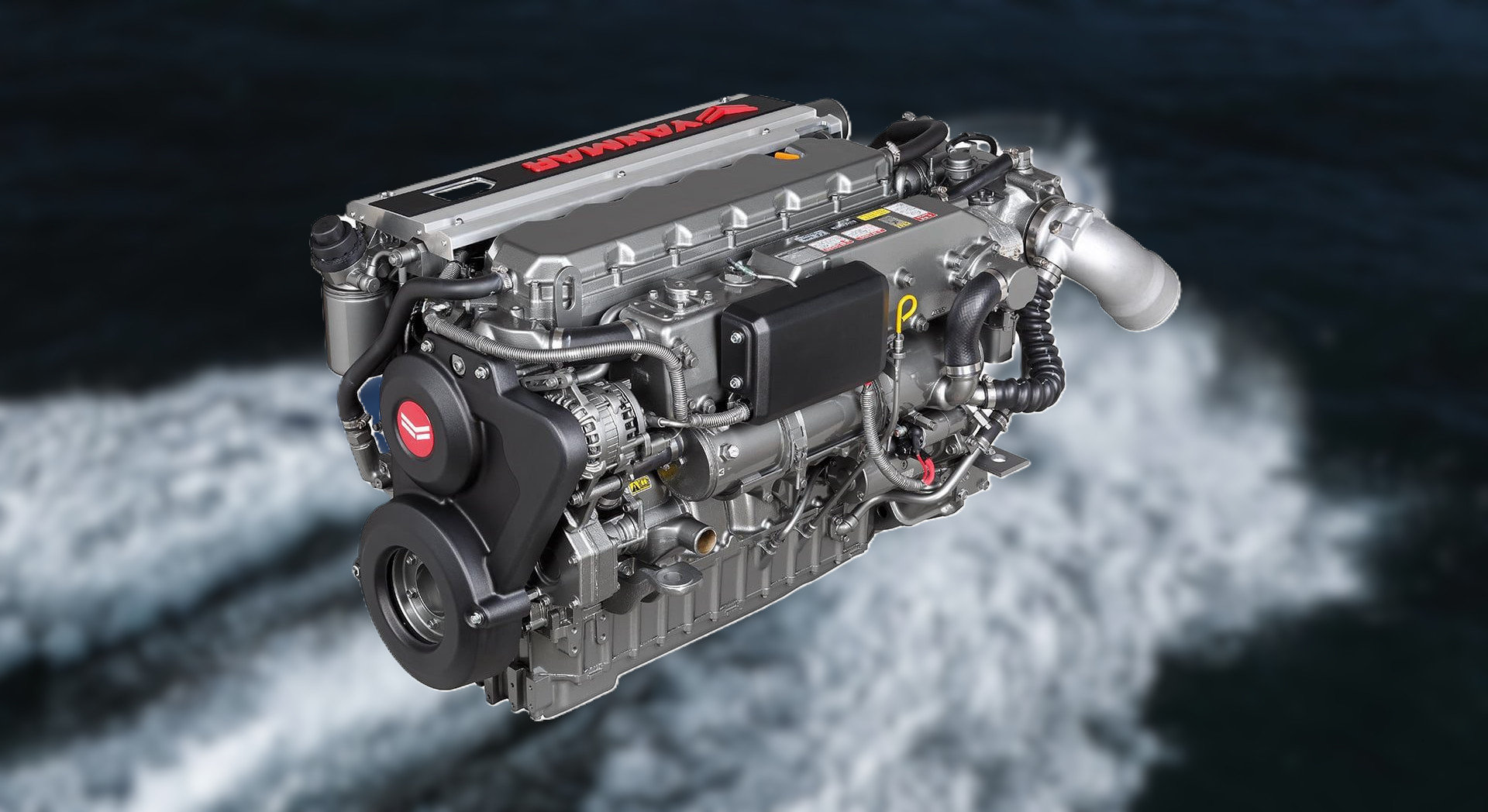
Yanmar specifies a formal break-in programme covering the first 50 hours for the Yanmar 6LY series (6LY400 and 6LY440).
Failing to properly break in the engine can significantly affect performance and oil/fuel consumption due to cylinder glazing and improper seating of components.
Important for the entire break-in period
- monitor the coolant temperature, should be 71–87 °C
- avoid low idle and low speed (no more than 30 minutes at a time)
- if engine has been operated at low idle/low speed, you must race the engine (briefly rev from idle to high speed while in neutral - repeat 5 times)
- get the engine up to operating temperature with moderate load (again: avoid idling and low speed)
After low-idle operation, racing the engine is vital to clean carbon from the cylinders (to prevent glazing) and the fuel injection valves!
First 10 hours
- maintain 2,800–2,900 RPM / 60-70% load most of the time
- avoid WOT (wide-open throttle) and max engine speed (never more than 1 minute at a time)
The next 40 hours
- operate the engine across the entire rev range, with a baseline of 2,900 RPM / 70% load most of the time
- every 30 minutes: increase to about 3,100 RPM / 80% load for 10 minutes and then increase to WOT for 4-5 minutes
The break-in period is not the time for an extended cruise at low speed!
Engine load table
First service after 50 hours
After the initial 50 hours, it's important to perform the first service. During break-in you will get debris/metal shavings in the engine oil, so it's important to have the oil and oil filter replaced by the 50-hour mark.
Plan the initial service so that it happens as closely to 50 hours as possible.
Daily checks
Before starting the engine, make sure to check:
- engine oil level (dip stick)
- coolant level (overflow tank)
- belts and hoses (belt tension, hoses dry and attached)
- raw water strainer (clean if there is debris)
- any leaks in engine compartment
After starting the engine, check:
- exhaust-water discharge (ensure cooling water is discharged)
- oil pressure
- battery voltage (>14V indicates alternator is charging the start battery)
Things to note during operation
It's a good idea to have pen and paper (or whatever method you prefer) to note these at regular intervals:
- coolant temperature
- oil temperature
- oil pressure
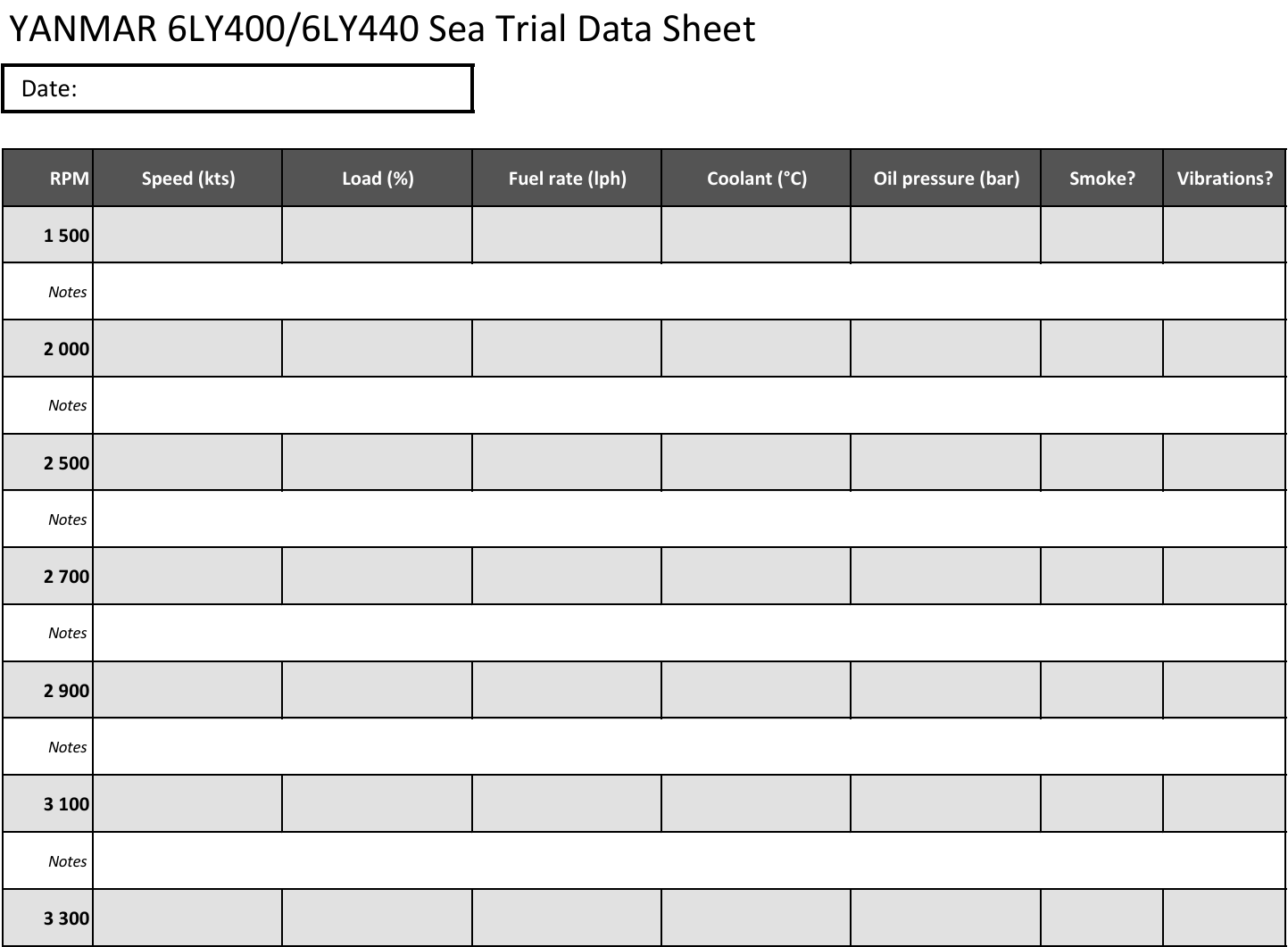
- boat speed, engine load, and fuel consumption at different RPMs
- exhaust appearance
- any unusual vibrations or noise
- oil, coolant or fuel leaks
- warning lights or alarms
Here is a simple data sheet you may find helpful (download the PDF if you'd like to print it):
Plan when and where to break in
The break-in procedure might not fit your intended normal use. For example, we enjoy slow-boating around 7 knots among the 30,000+ islands in the inner parts of the Stockholm archipelago.
That's not ideal for the break-in period where we want higher engine loads (i.e. higher boat speeds).
Ideally, break-in should be performed in more open waters where there is space to operate the engine according the break-in procedures and be able to take notes without having to constantly maneuver out of the way of other boats.
Example of a break-in trip
- Prepare your departure so that you can toss your mooring lines as soon you have started the engine, to prevent it from idling to long
- Leave the slip and increase engine RPMs to maintain light to moderate load until engine reaches operating temperature (coolant temperature >70 °C)
- If within the first 10 hours: increase throttle and remain in the 2,800-2,900 RPM range for most of the trip (check the Yanmar instrument to verify that results in 60-70% load)
- If in the 10-50 hour range:
- throttle to about 2,900 RPM (70% load) for 30 minutes
- throttle up to 3,100 RPM (80% load) for 10 minutes
- increase to wide-open throttle for 4-5 minutes
- (repeat)
- When returning, if low-idling was unavoidable for 30 minutes or more during approach and docking, make sure to race the engine (briefly throttling up to high revs in neutral 5 times) and then let it idle for a few minutes before turning off